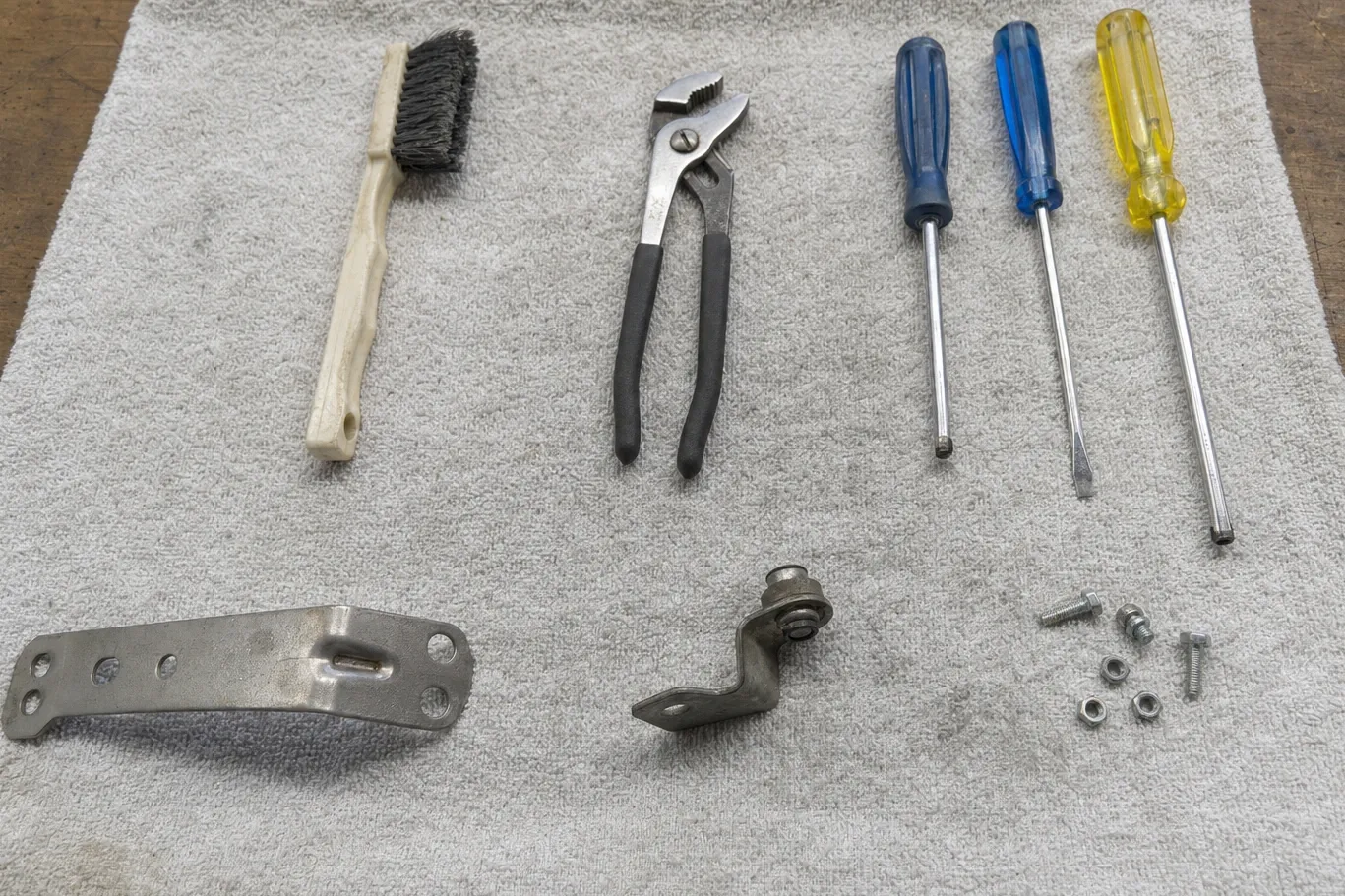
Range and Cooktop Repair
The Rear-Wing Kitchen: Fitting and Servicing a Viking Range in an Edgewater or Rogers Park 1920s Courtyard Walk-Up
5 min read
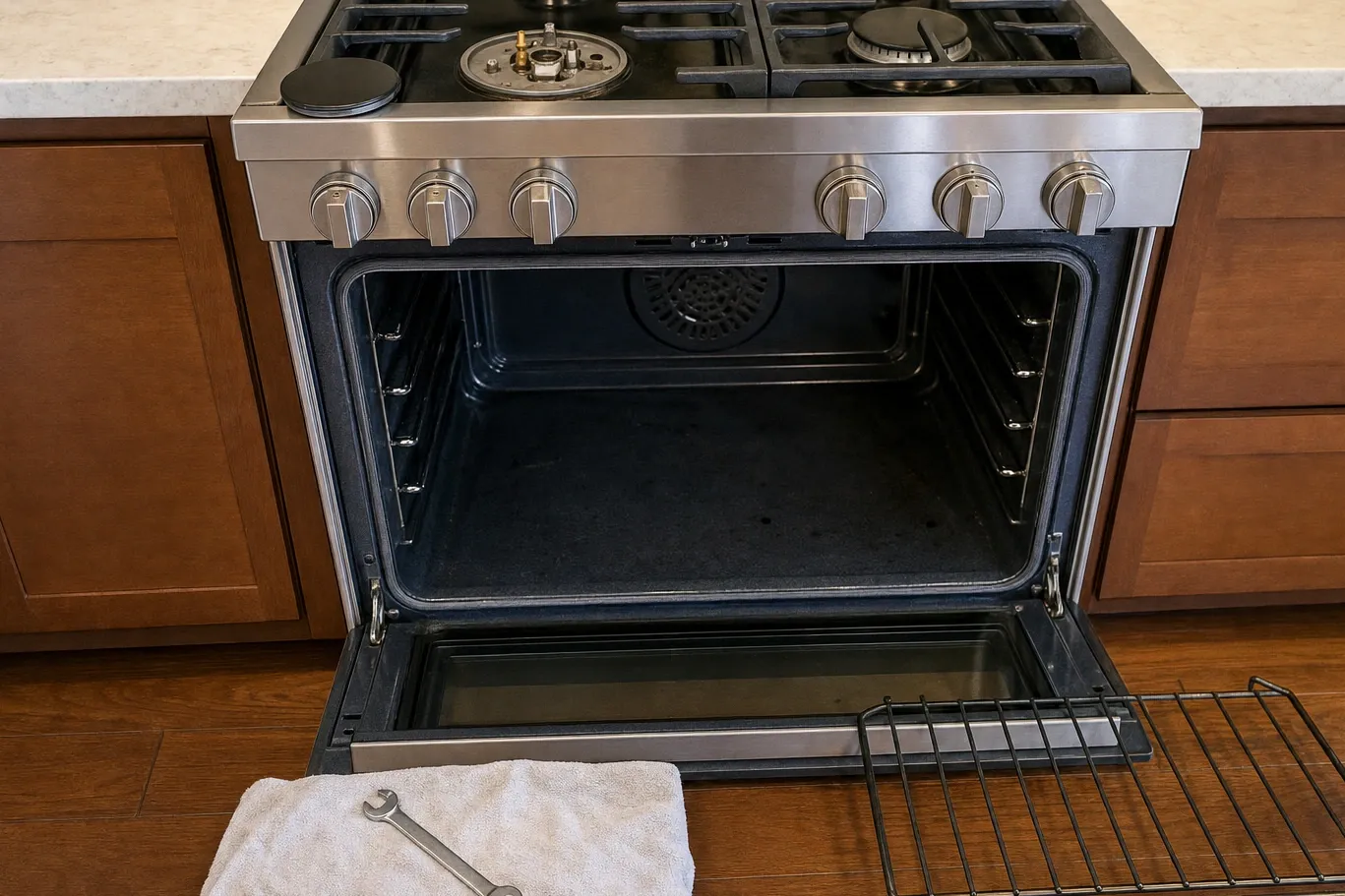
Edgewater alone holds 74 full courtyard and 37 half courtyard apartment buildings — 2,933 units, roughly nine percent of the neighbourhood’s housing — and the oldest standard full courtyard, at 5340-48 North Kenmore, dates to 1911. Rogers Park has the same building type from the same window, 1910 to 1929, and the same three-storey limit. If you cook in one of them, the plan of your building was settled a century before your equipment existed.
What Chicago actually does differently
The courtyard walk-up put the good rooms on the courtyard and everything else behind them. The Edgewater Historical Society states it plainly: kitchens, maid’s rooms and bathrooms “almost never took up space on the courtyard; instead, they occupied the back sections”. Your kitchen is in the rear wing on purpose, and the back stair to the alley was its intended service route.
Two apartments per floor per entry, three storeys, no elevator anywhere in the type. That is not an old-building quirk; it is the defining constraint of every appliance job in one of these flats. Andersonville’s frame two-flats behave the same way, with the added complication that the professional range usually went in after the cabinetry did.
West Ridge is the counterweight. The streets west of Ridge run to brick bungalows and raised ranches — the Rogers Park Manor Bungalow Historic District alone lists 329 buildings, 247 of them 1920s Chicago bungalows. Wide kitchens, original cabinetry, ground-floor access, and very often a modern professional appliance dropped into an opening that was cut for something considerably narrower.
How that reaches the appliance
The rear room in a 1920s walk-up was dimensioned for a 24 to 36 inch gas stove and an icebox. A 36 or 48 inch Viking with a dishwasher beside it has to occupy a room and pass through a doorway that were never drawn with either in mind, and the only route in or out is a back stair with a turn in it.
So the first work of the visit is measurement, not diagnosis: the stair width at the turn, the newel, the door leaf and whether it can be lifted off its pins, the threshold, and the clear opening in the cabinetry. Doors come off. Feet come off. The appliance travels on its back or side only where the model permits it, and it stands before it is powered.
Exhaust is constrained by the same plan. A rear-wing hood vents either into a narrow light court shared with the flats above and below, or through a rear wall a few feet from a party line. That limits where the duct can legally terminate and, more practically, how much air the shaft will actually pass regardless of what the hood is rated for. In Edgewater’s lakefront buildings there is a further layer: the freight elevator has to be booked and the building engineer wants notice before anyone turns up with tools.
What tends to give first
On professional equipment in this housing stock, the surface fails long before the oven does.
One burner clicking repeatedly while the others light on the first turn is that burner’s own problem — a cap sitting proud or rotated, a port blocked by boil-over, or an electrode still damp from cleaning. When every burner clicks, look at the spark module or the supply instead.
A flame that lifts off the port and snuffs itself when the hood goes to full is not a burner fault at all. A small rear kitchen with a strong hood and a shared shaft goes slightly negative, and the flame is simply the first thing to notice. Simmer that either drops out completely or creeps hot enough to catch a sauce belongs to the same family, or to a valve whose grease has dried into varnish.
A knob that turns through its whole travel with no click and no gas behind it is mechanical: a stem that has sheared or a valve that has seized. In Rogers Park walk-ups there is one more possibility worth naming — the gas run from the meter to a rear-wing kitchen can be long, and a long run shows up only at full input, as an appliance that behaves perfectly until everything is lit at once.
What you can check yourself
Lift the burner cap and look at it. It should be dry, seated square and sitting flat. Clear the ports with a pin, never a drill bit, and never widen one. Refit and retest before you conclude anything.
Ask whether the fault follows the burner or the knob position. Swap a cap between two burners and see if the problem travels with it. Hold a steady simmer, then bring the fan up through its speeds: if the flame only dies once the hood reaches full, the appliance is healthy and the room is short of air.
Check that every knob is genuinely in the off position before deciding there is no gas, and check whether the building shutoff has been touched during unrelated work — in a walk-up, other people’s plumbing jobs happen on your riser.
What not to attempt: do not open the manifold, do not adjust the regulator, and do not drag a heavy range out across a hundred-year-old floor on its own feet.
What a visit settles
Diagnosis is 89 dollars. The bands on this site run 180 to 420 dollars for an igniter or burner assembly, 210 to 430 dollars for an oven thermostat or heating element, 460 to 700 dollars for a control board or touch panel, 270 to 700 dollars for a refrigeration fan or defrost system, 200 to 390 dollars for a dishwasher pump or control, and 1,390 to 3,060 dollars for compressor or sealed-system repair.
Just as importantly, the visit settles the route. Before any part that requires the appliance to come out is ordered, we agree how it leaves the room, how it gets down the back stair, and — in an Edgewater lakefront building — when the freight elevator is available and what notice the engineer needs. Getting that wrong turns one visit into three.
Book it here, or put the symptom to (872) 282-4222 first.
Follow-ups
- Can a 48-inch range be brought up the back stair of a three-storey walk-up?
- Often yes, but it has to be measured first. The binding dimensions are the stair width at the turn, the newel post, the door leaf and the threshold, not the room itself. Doors and feet come off routinely. Where the turn is genuinely too tight, the answer is usually a narrower unit rather than a crane, and it is much cheaper to learn that before delivery than on the landing.
- Why does my flame die when I turn the hood up in an Edgewater courtyard building?
- Because the kitchen is a small rear room and the hood has nowhere to draw replacement air from. A shared light-court shaft makes it worse, since the pressure in it depends on what every other unit is doing. Test it by holding a simmer with the hood off and then at full speed. If the flame only fails at full, the burner is fine and it is a make-up air problem.
- One burner clicks forever while the rest light immediately. What is that?
- Almost always that burner's own cap, ports or electrode rather than the spark module — a module fault normally affects every position. Lift the cap, confirm it is dry and seated flat, and clear the ports with a pin. If it still clicks with gas flowing, stop, because unlit gas accumulating under a cap is worth avoiding. Igniter and burner assembly work runs 180 to 420 dollars here.