Dishwasher Repair
How to Clean a Viking Dishwasher Before the First Load
5 min read
Before the first load, give a dishwasher four things: an empty-out of any packing, a rinse of its filters, a wipe of the tub and door seal, and one empty run on the hottest cycle with a cup of plain white vinegar or a dishwasher cleaner inside. That run also tests the installation, so a slow drain or a drip under the cabinet shows up while the racks are still bare. In Andersonville, Edgewater, Rogers Park and West Ridge the dishwasher often simply comes with the unit you bought or rented, so it may be fresh from the box or may have stood idle for months. The routine below covers both.
Why clean a machine that has never washed a plate
A new dishwasher is not as clean inside as it looks. Many are run with water before they leave the plant, so a small puddle in the sump is normal, and the tub can also hold dust, foam blocks and tape. A used machine has a different problem: whatever the last owner left in the filter has been sitting in stale water. Either way, the first wash should be of the dishwasher itself.
Step 1: Empty it and make sure everything moves
Pull both racks all the way out and remove anything that is not part of the appliance, such as foam spacers, plastic clips holding the racks and strips of tape. Spin each spray arm by hand; it should turn freely and not catch on a rack or a tall utensil basket. Run a flashlight along the floor of the tub for screws or scraps of insulation dropped during installation, because a small hard object reaching the pump is a costly way to begin. Then confirm the door latches without forcing.
Step 2: Take out and wash the filters
The filter is the part most owners never knew they had. On Viking’s 3 and 5 Series dishwashers it lives in the floor of the tub as three separate pieces. Grip the round micro and coarse assembly, unlock it with a counterclockwise twist and raise it clear; the flat mesh panel it was holding down can then be drawn out by hand. Scrub every piece gently under a warm tap using a soft brush, never a wire one. Going back in, the flat panel goes first and the round assembly sits on top, turned the opposite way until you hear the click; a filter left sitting loose lets debris through to the pump. Viking’s manual sets this at least once a week, and that interval suits most other makes too.
Step 3: Wipe the tub, door edge and gasket
With the filters out, wipe the floor of the tub and the sump with a damp cloth. Then work on the places a wash cycle never reaches: the bottom edge of the inner door, the hinge corners and the rubber gasket around the opening. Warm water with a drop of dish soap lifts grime from the gasket without hurting the rubber, and a dry cloth afterward keeps mildew from starting. Finish by checking that the detergent cup and the rinse aid cap both open and close cleanly.
Step 4: Run one empty hot cycle and watch the install
Stand a cup of plain white vinegar upright on the top rack, or use a dishwasher cleaner as its label directs, and run the hottest full cycle with no detergent. Stay close for the first ten minutes. You should hear the fill, then the wash pump, and after the first drain the tub should hold no more than a little water around the filter.
This is where most first-day trouble appears, and the cause is usually the installation rather than the machine:
- It will not drain. When a dishwasher empties into a newly fitted garbage disposal, the knockout plug inside the disposal’s inlet has to be removed, and it is often missed. Some older Viking built-in models flash their cycle buttons for a Drain Timeout fault, and the manual’s checklist for it runs from the sink drain and that disposal plug to clogs or kinks in the hose, the high loop, how level the machine stands and the filters.
- E:02 on the display. On Viking VDWU and FDWU models this means the water supply has been cut off, often by a shutoff valve under the sink that was never opened.
- E:01 on the display. The same models show this when they sense overfilling or a leak, and the dishwasher tries to pump itself out. If it keeps returning, the machine needs a technician.
- Water on the floor. Close the supply valve, switch off the circuit breaker and look at the supply and drain connections behind the toe kick before running it again.
Set the rinse aid for Chicago water
Chicago’s tap water comes from Lake Michigan and carries enough calcium and magnesium to leave spots and a cloudy film on glassware once the rinse aid runs out. Fill the rinse aid reservoir before the first real load. Viking’s 3 and 5 Series machines dose rinse aid on a scale from P:0 to P:4 and arrive set at 3. Move it up one step if dishes come out with water stains, and down one step if you notice a bluish streak that wipes away with a finger.
A routine to keep once it is in use
| Task | When | Who |
|---|---|---|
| Brush the three filter pieces | At least weekly | You |
| Top up rinse aid | When it reads low or glasses spot | You |
| Wipe gasket, door edge and hinge corners | Whenever grime starts collecting | You |
| Empty hot cycle with vinegar or cleaner | Every few weeks, or if it smells | You |
| Clear the spray arm holes | When one area of the rack stays dirty | You |
| Pump, hoses, latch and fault codes | When a symptom appears | Technician |
What a professional visit adds
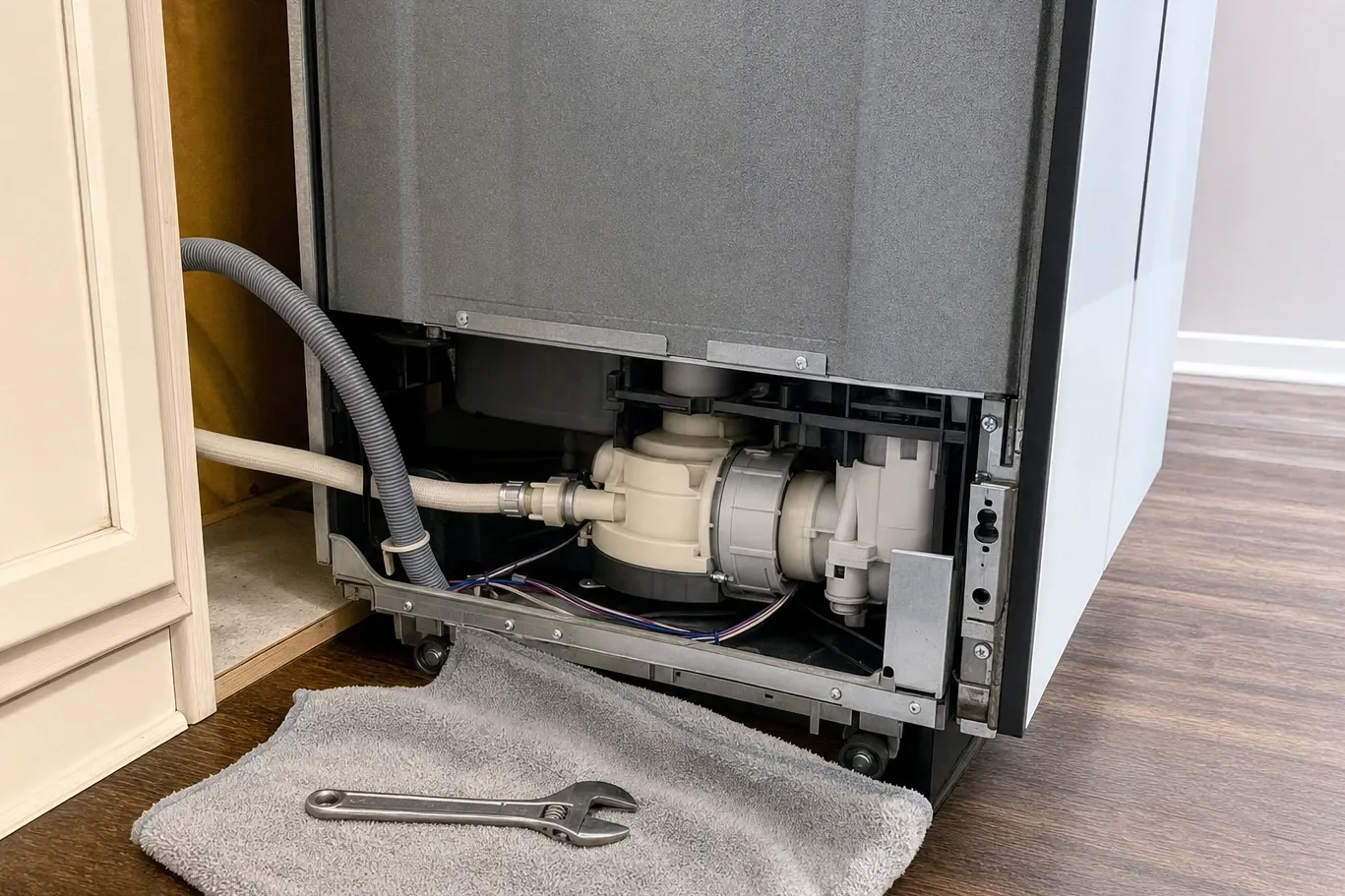
Owner cleaning never reaches the drain pump, the inlet valve or the circulation pump under the tub. A technician removes the toe kick, checks every connection for weeping, confirms the high loop or air gap, levels the machine and works through any fault the control is showing. Viking Repair Service Chicago is an independent service that is not affiliated with Viking. Diagnosis starts with an $89 flat visit fee, and when you go ahead with the work that fee is deducted from what the fix costs. When the fault is the pump or the control, the typical range is $200–$390, with a firm price given once the diagnosis is done. Our dishwasher repair service page lists the faults we handle, the guides library covers the rest of the kitchen, and the phone line is (872) 282-4222.
Follow-ups
- Do I really need to clean a brand-new dishwasher before using it?
- Yes. A new machine can still hold packing pieces, dust and a little water left from testing before it shipped, and the first empty cycle doubles as a check of the water supply, the drain and the connections under the sink.
- How often should I clean the dishwasher filter?
- At least once a week is what Viking's own care manual asks for on its 3 and 5 Series dishwashers, and it is a sound habit for any make. Unlock the round assembly with a counterclockwise twist, raise it out, free the flat mesh underneath, scrub each part with warm water and seat them again until the click.
- Should the drain hose have a high loop or an air gap?
- It needs one or the other, and which one depends on local plumbing rules and how the sink is set up. A high loop fastens the hose up under the countertop; an air gap is a small fitting on the sink deck. Both stop dirty sink or disposal water from flowing back into the tub.
- What does E:02 mean on the first cycle?
- On Viking VDWU and FDWU dishwashers, E:02 means the water supply has been cut off. After a new installation that is usually a shutoff valve under the sink left closed or only partly open. On VDWU724 and FDWU724 models the program pauses and picks up again once water returns.
- Why does a dishwasher that sat in an empty apartment smell?
- Water left in the sump goes stale and any food trapped in the filter starts to rot while nobody runs the machine. Washing the filters, wiping the door gasket and running one hot empty cycle usually clears it. An odor that returns within days points to water that is not draining fully.